Pylon & Building Signs Sydney
Pylon and building signs engineered for the site, taken through council approval, built, lit and installed by crane or elevated work platform.
On a busy road, a pylon is often the only sign drivers see in time to turn in. Industrial estates in Wetherill Park and Eastern Creek, car yards on Parramatta Road, service centres, medical centres, schools, churches and shopping centres all rely on pylon signs to be found from the road. Building signage does the same job on a facade, putting your name where it can be seen from blocks away.
We design, engineer, approve, build and install pylon signs and large building signs across Sydney.
Pylon and building sign types
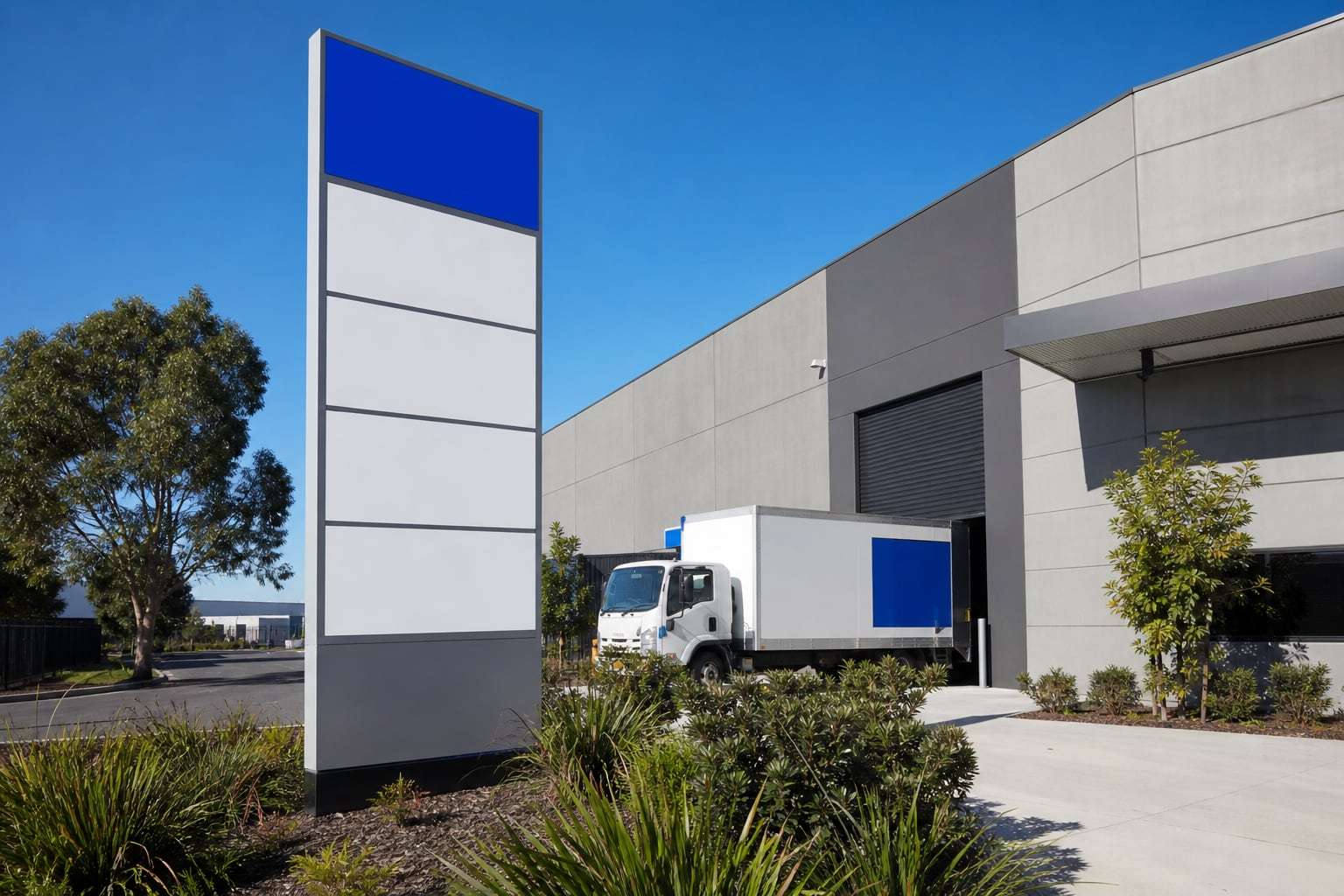
Freestanding pylons. A single or double-sided sign on one or two legs, or a solid monolith from the ground up. Lit or unlit.
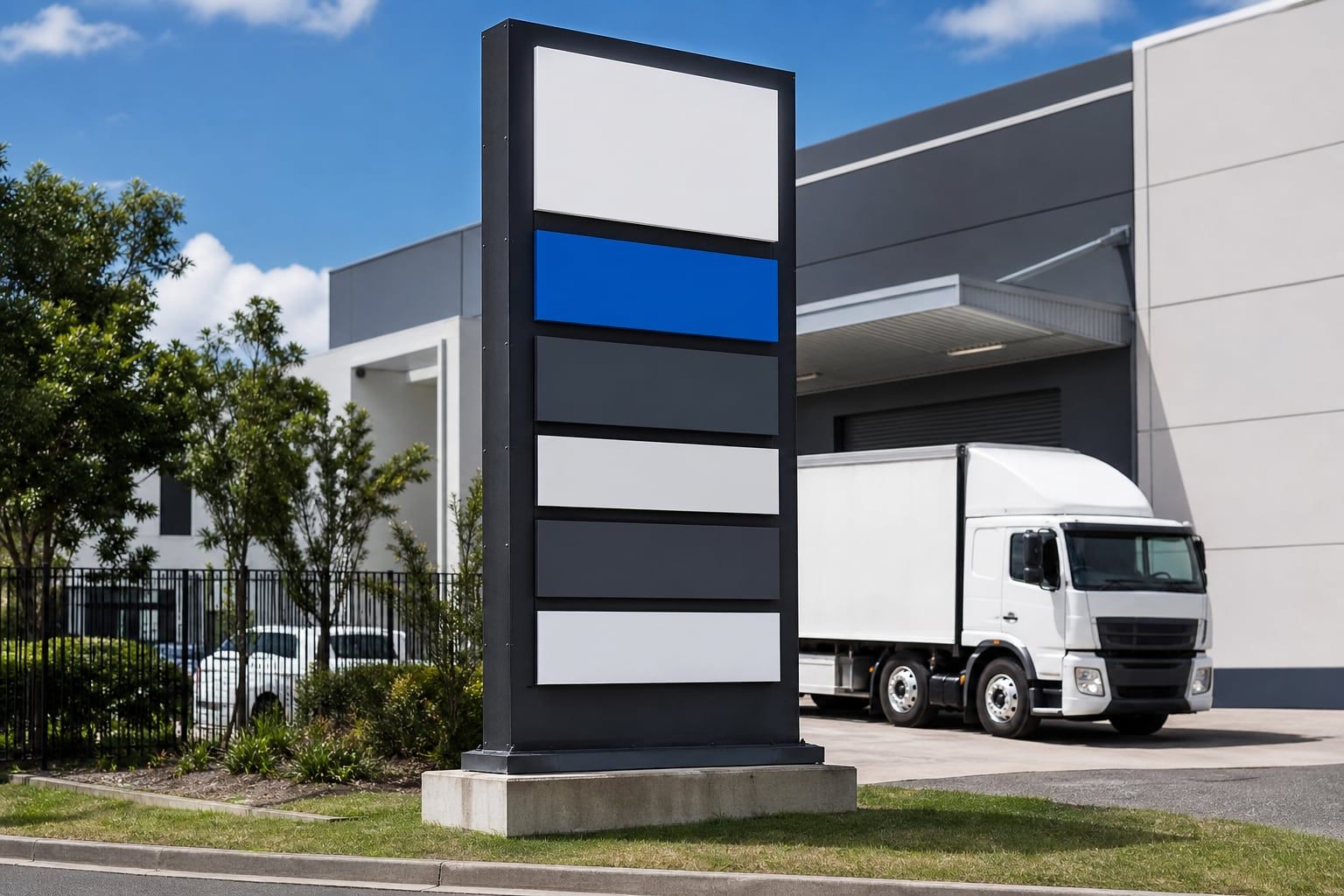
Multi-tenant pylons. A main header for the estate or centre, with tenant panels below. Panels slide out and get replaced as tenants come and go.
Monument and entry signs. Low, wide signs at the entrance to an estate, school, church or business park, often in render, stone or aluminium cladding with cut letters.
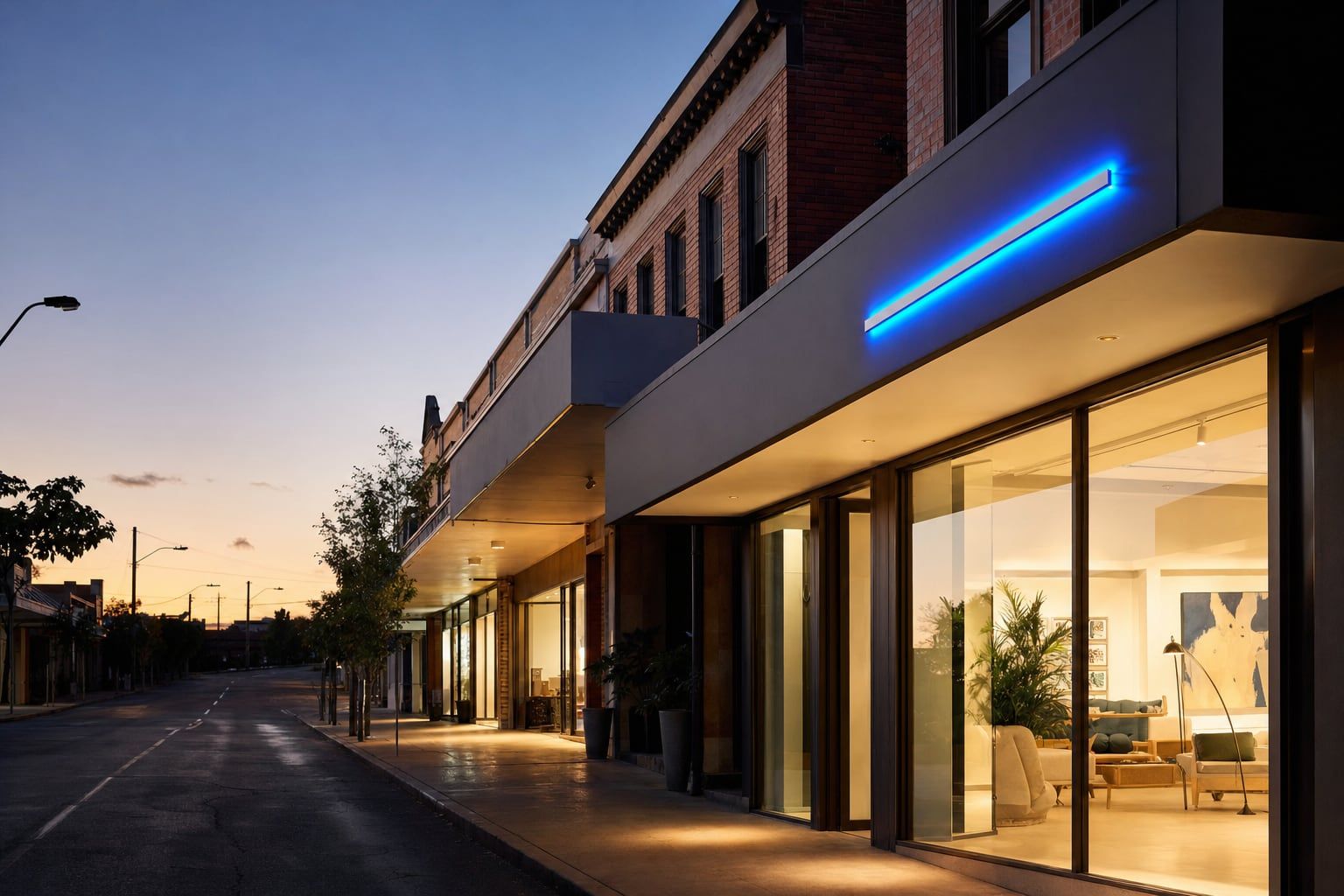
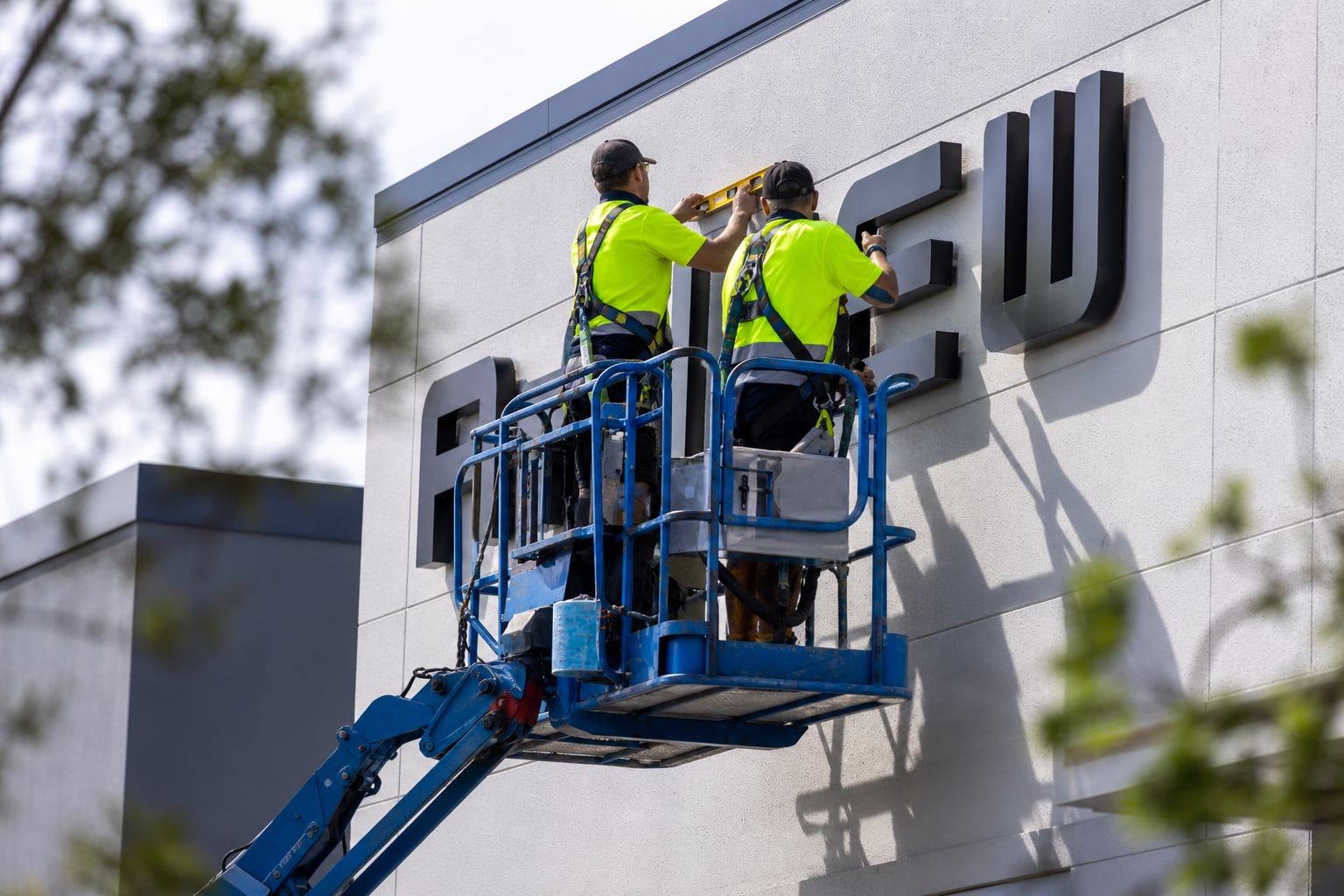
Building signage. Large fascia panels, illuminated letters and logos high on a building face, often installed from an elevated work platform or crane.
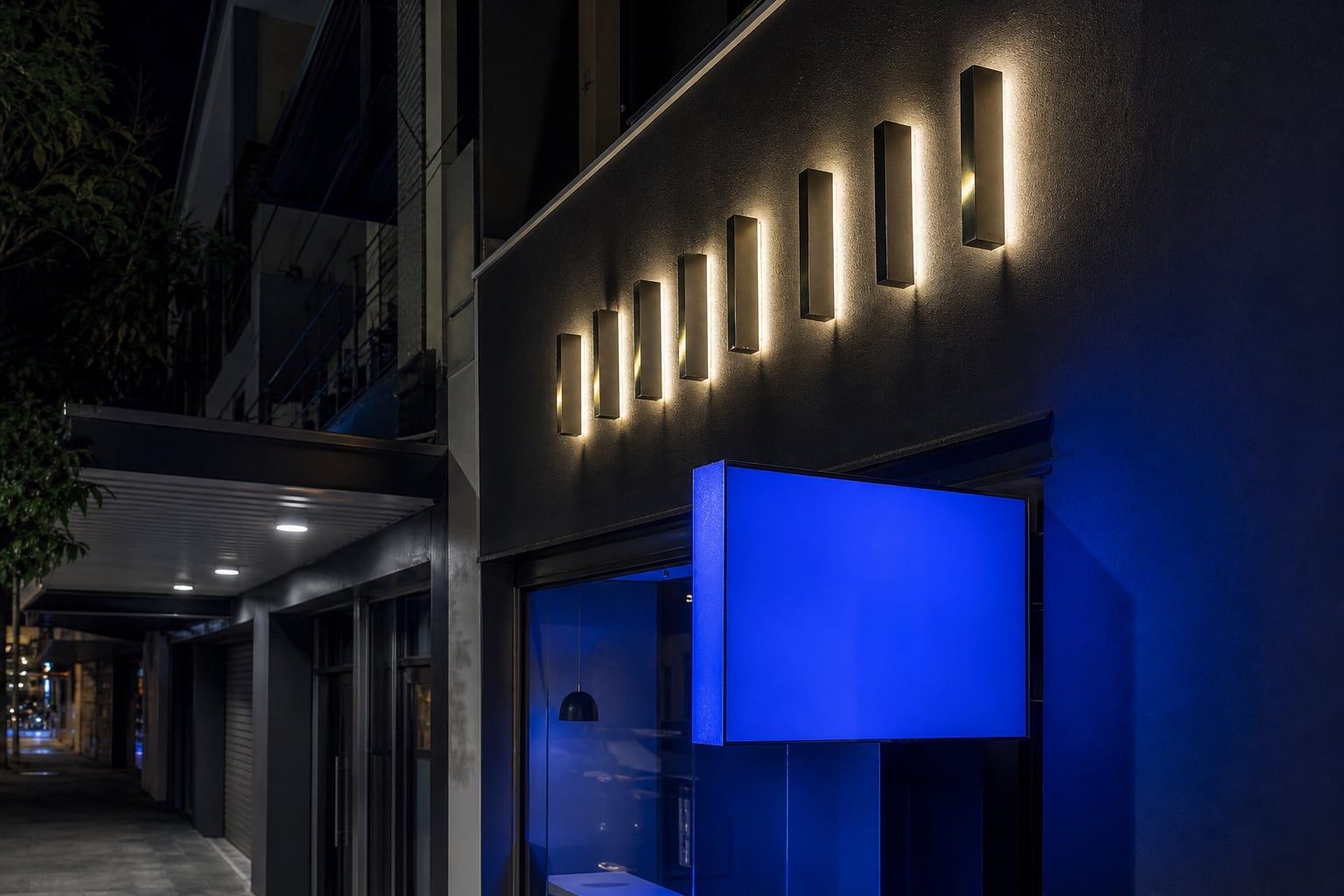
3D letters. Fabricated aluminium or stainless steel letters, flat or illuminated, for facades and entrances. Halo-lit and face-lit options are covered on our LED signs page.
Engineering and structure
A pylon is a structure, not just a sign. It has to resist wind loads calculated for its height and location, and it sits on a concrete footing designed by an engineer. Coastal and elevated sites, such as industrial land near Botany Bay or ridge lines in the Hills District, see higher wind loads than sheltered ones. We arrange structural engineering for every pylon and build to it.
Before we dig, underground services are located through Before You Dig Australia and, where needed, by a locator on site. Hitting a gas, water or electrical service under a car park is expensive and dangerous.
Approvals
Pylon signs and large building signs almost always need development consent from council, and some need landowner, strata or centre management consent too. Councils look at height, size, lighting, the number of signs on the site and the effect on traffic and nearby homes. We prepare the drawings, elevations and photomontages for the application. Our guide to signage council approval explains the process in more detail.
Height work and access
Building signs and tall pylons are installed using elevated work platforms or cranes. A boom-type elevated work platform with a boom of 11 metres or more needs an operator with a high risk work licence, and on public roads traffic control and council permits may be needed for the lift. We plan the lift as part of the job, often outside business hours on busy sites.
Lighting and power
Most pylons are lit, and the power usually runs underground from the building’s switchboard. The trench, conduit and connection are part of the job and need a licensed electrician. A timer or daylight sensor controls when it runs, and consent conditions sometimes limit the hours.
Sightlines and placement
Where the pylon stands is as important as what it says. We look at how fast traffic is moving, where drivers need to start braking to turn in, and what blocks the view: street trees, power poles, neighbouring signs and parked trucks. On a 70 km/h road, the sign has to be seen early, so it needs height and very simple text. At an estate entrance, it needs to sit clear of the driveway sightlines so it doesn’t block drivers’ view of pedestrians.
Refurbishing old pylons
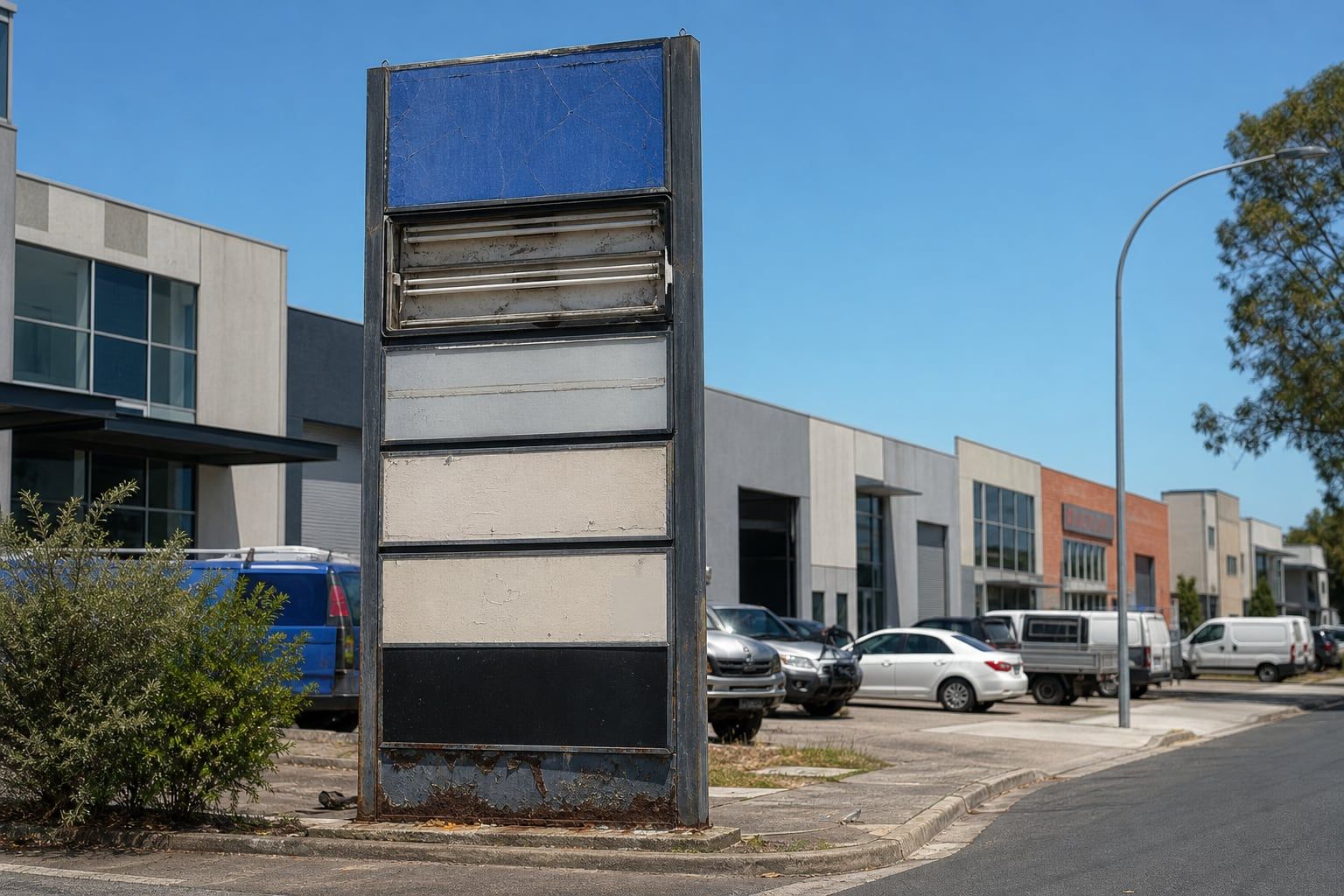
Many Sydney pylons are structurally fine but look dated: faded faces, dead fluorescent tubes, old tenant names. New faces and an LED retrofit can bring an existing pylon up to date for a fraction of the cost of replacing it. Our sign installation crew also removes old structures when a site is redeveloped.
Building signage often goes hand in hand with new shop signs at ground level. See our full Sydney signage range.
Updated
What good pylon & building signs looks like
Pylon & Building Signs across Sydney
Pylon & Building Signs in Sydney: step by step
- Site inspectionWe look at sightlines from the road, the setback, services in the ground and where power can come from.
- Design and engineeringA concept for your approval, then structural engineering for the footing and frame.
- ApprovalsPylon and large building signs usually need development consent. We prepare the drawings and photomontages for the application.
- Build and installFootings are poured, the structure is fabricated, then lifted in by crane or EWP and connected by a licensed electrician.
Pylon & Building Signs guides for Sydney homeowners
Pylon & Building Signs questions in Sydney
Something else on your mind? Call 0451 784 402 and ask.
Does a pylon sign need council approval?
In most cases, yes. Freestanding pylons, especially tall or illuminated ones, usually need development consent from council. We help prepare the application.
Can a pylon have spaces for several tenants?
Yes. Multi-tenant pylons have a main panel for the centre or estate name and individual panels for each tenant, which can be swapped when tenants change.
Do you need to dig?
Yes. A pylon sits on an engineered concrete footing. We check for underground services through Before You Dig Australia before any excavation.
Can you replace the faces on our existing pylon?
Usually, yes. If the structure is sound, new faces or panels and an LED retrofit can update it without the cost of a new pylon.